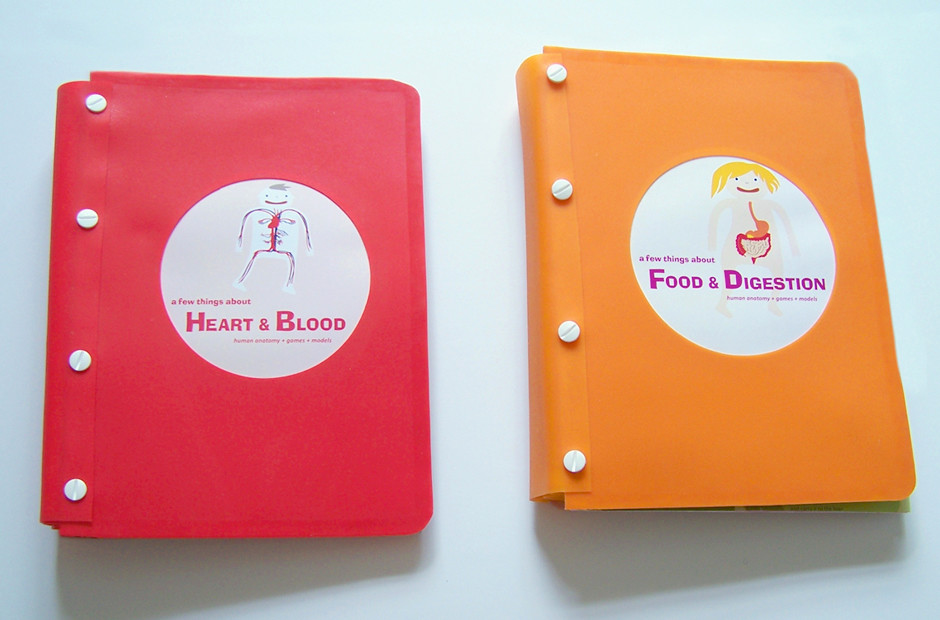
The kids anatomy book prototype design: ‘Touch, Feel, Understand’.
On person project. Prototype. Interactivity in Print.
University Final Project. 2011
Project included:
Idea generation • Market research • Research and consultation of technical implementation • Prototype production planning
• Material sourcing for prototypes • Consultations with education professionals • Artwork, layout design, printing
• Model making, prototype making • User testing, gathering, analyzing feedback • Presentation for the exhibition
——
With the main focus on younger kids and kids with learning disabilities the book provides with physical interactive models,
games and tools which involve several senses providing a deeper understanding of the subject.
The examples include: silicone, felt and paper models, smell samples, LED lights activated by buttons, magnet board and magnet stickers, and more.
Three books in total where made bound in sturdy silicone sheets for durability.
All project done by me: the concept, research, material sourcing, game design, handcrafted models,
illustrations, information editing, layout, binding, consultation with special school teachers, testing.
I explored ways to display information in 3D format, experimental binding options
with durable silicone cover and plastic screws, mechanical, textile, clay models, electric circuits.
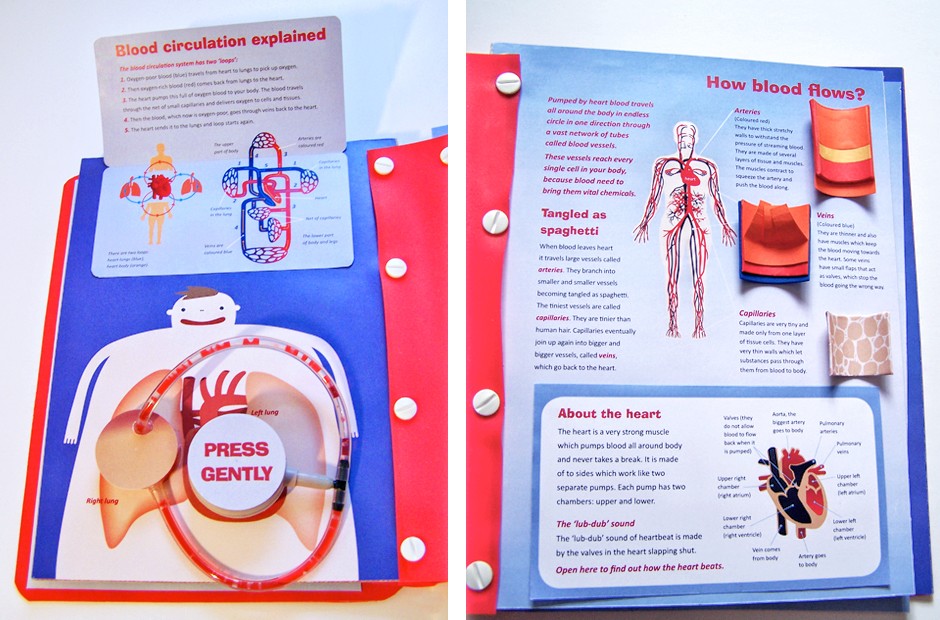
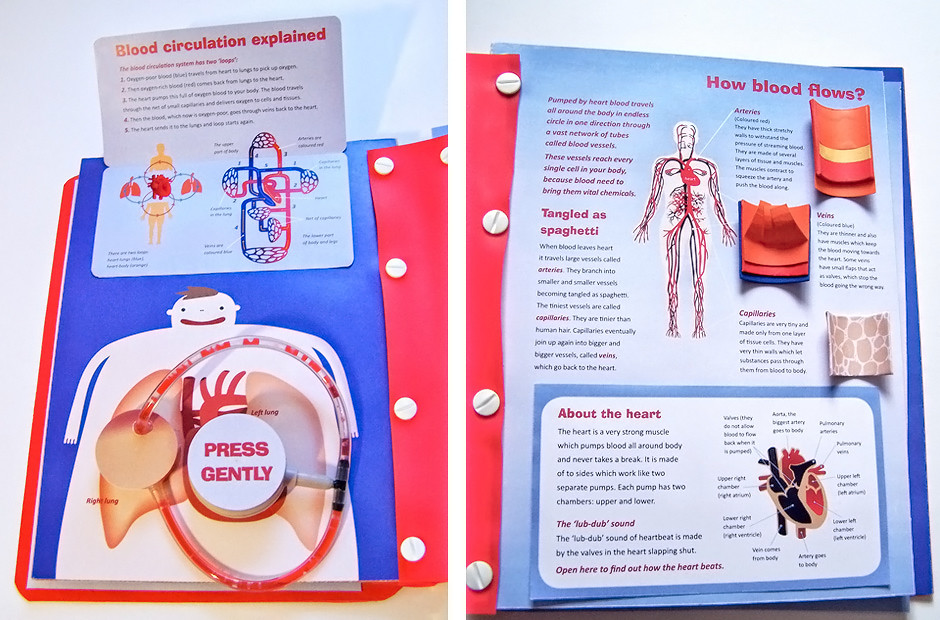
Left: interactive heart pump model illustrates blood flow in the heart – lungs system.
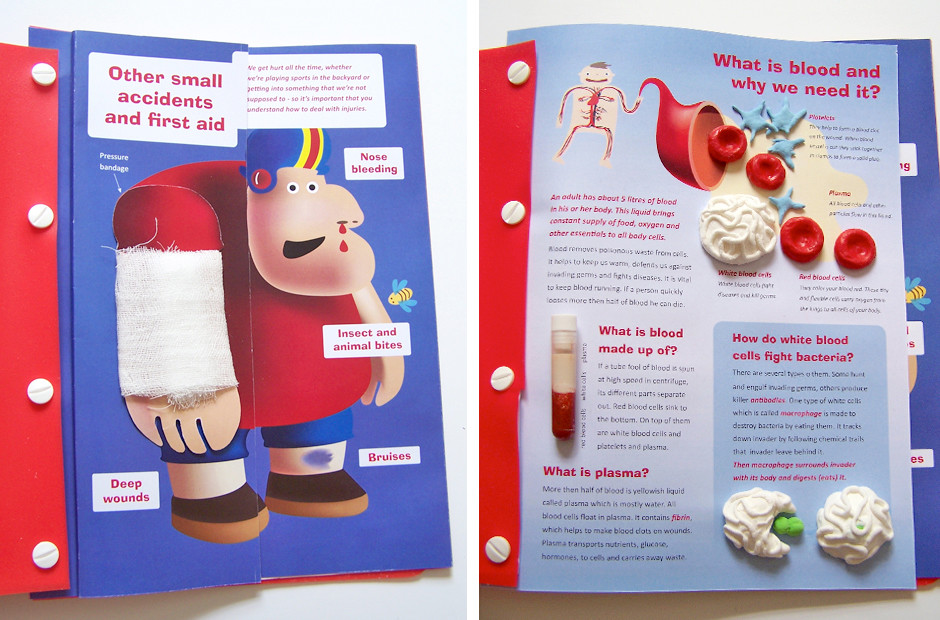
Right: Experimental ways to display information in 3D format.
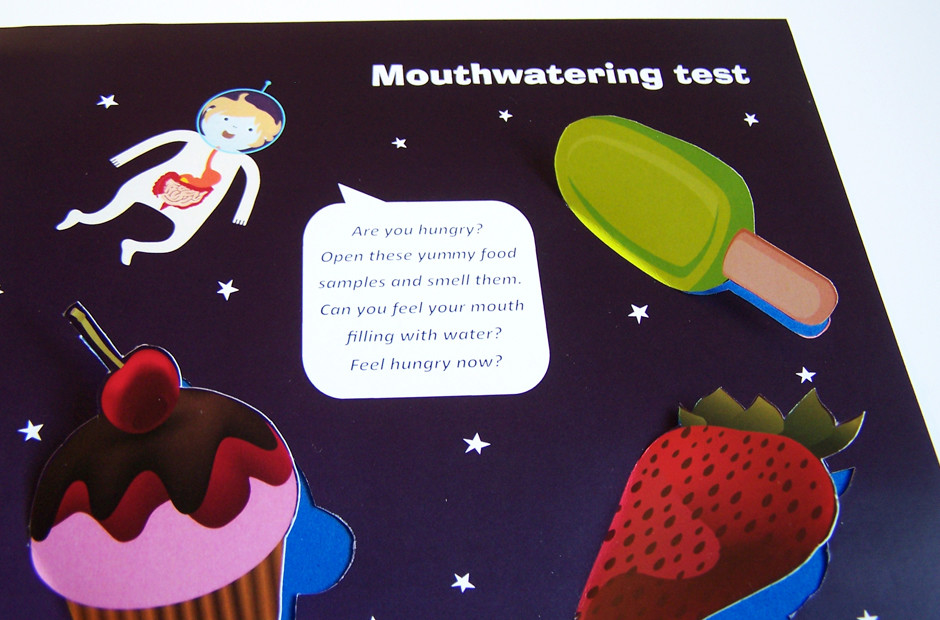
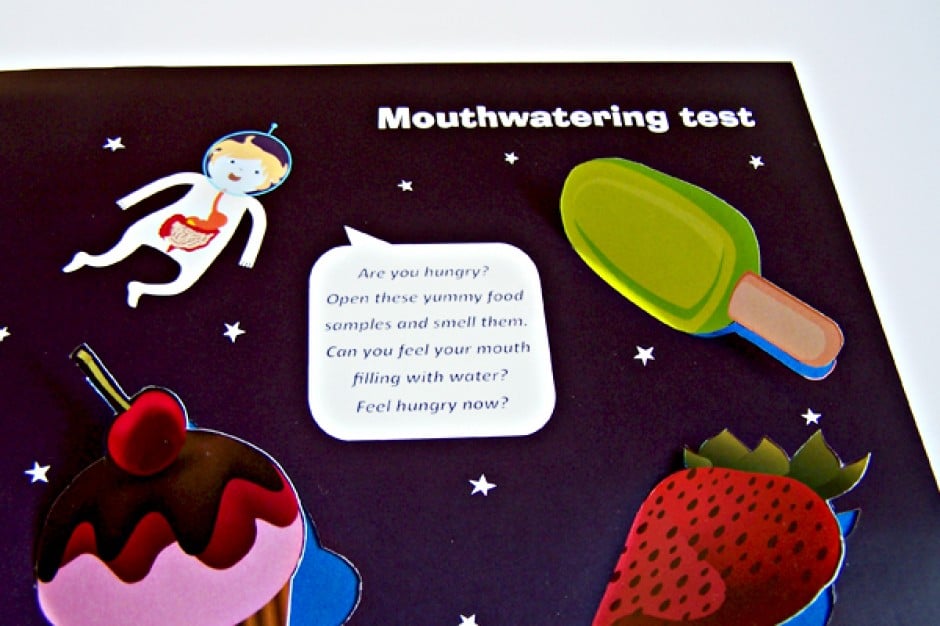
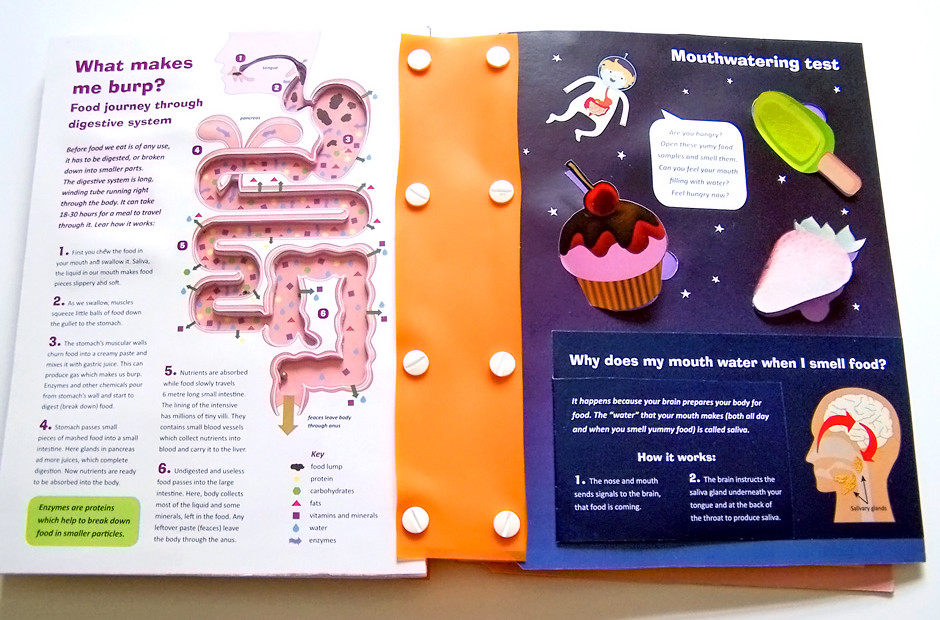
Saliva test: Food scented samples let the user test food smell – saliva excretion reflex.
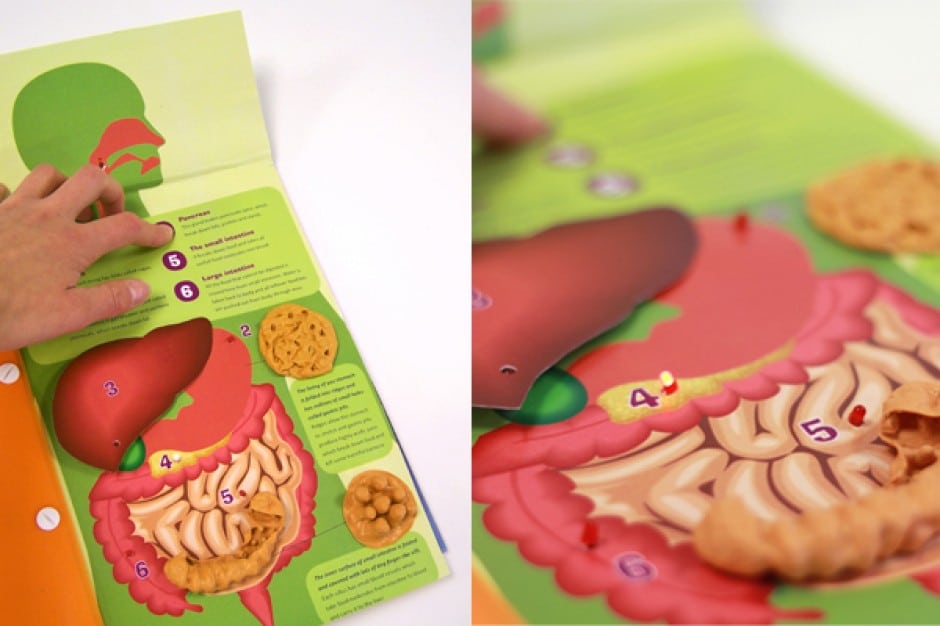
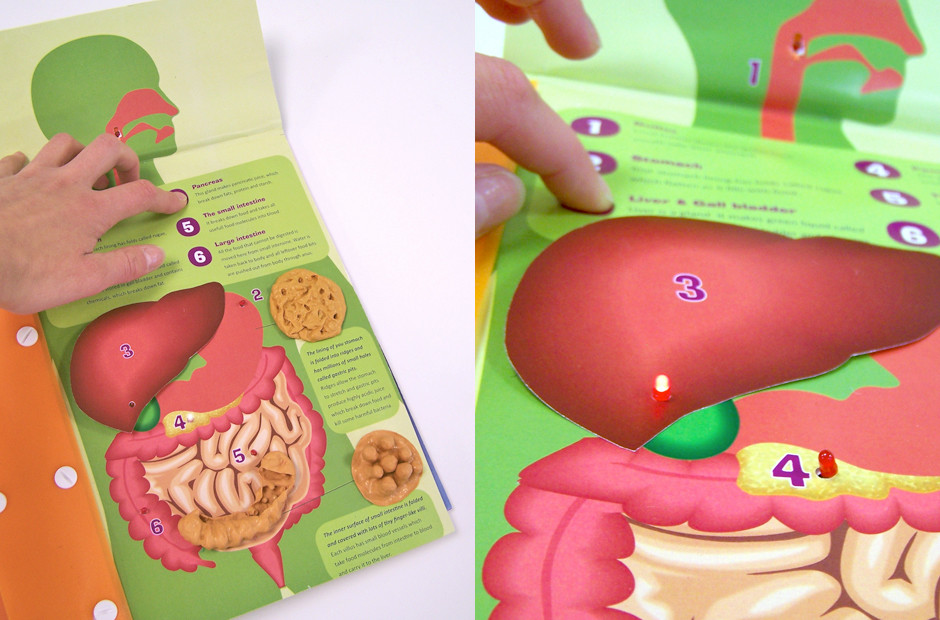
Buttons and LED diode lights show where the organ is located.
Silicone models show the surface of the intestines in 3D.
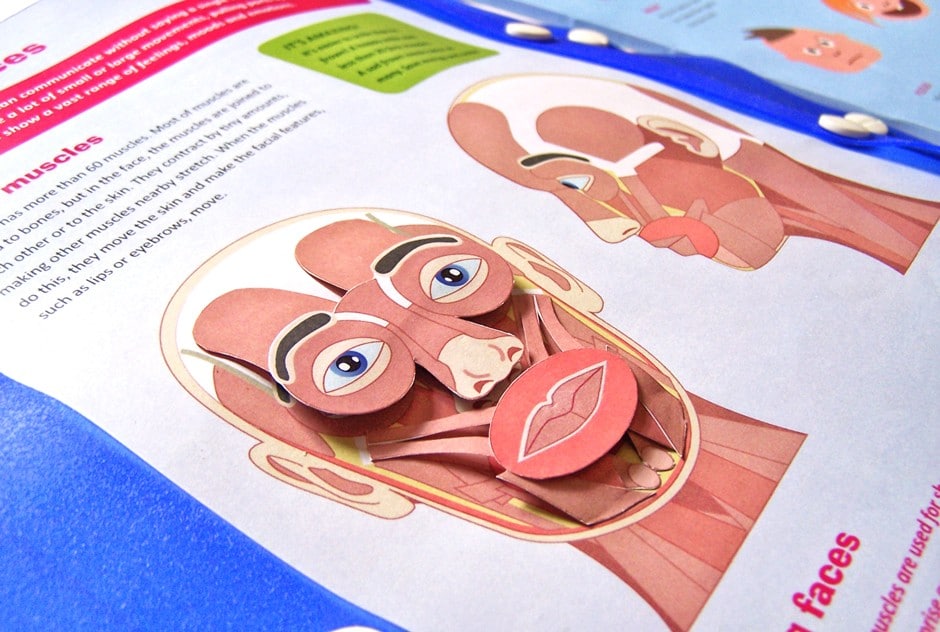
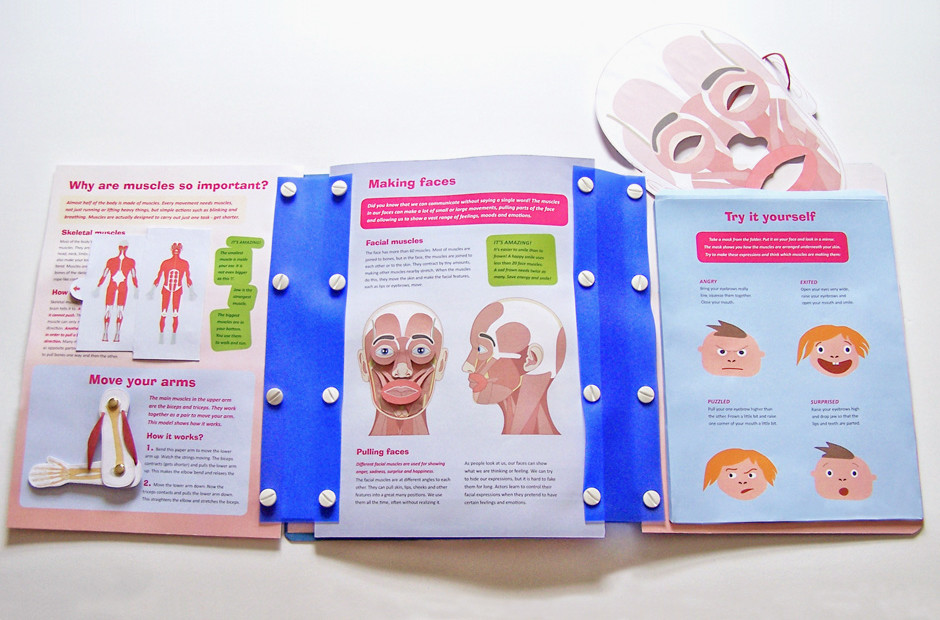
Pop up illustration of facial muscles.
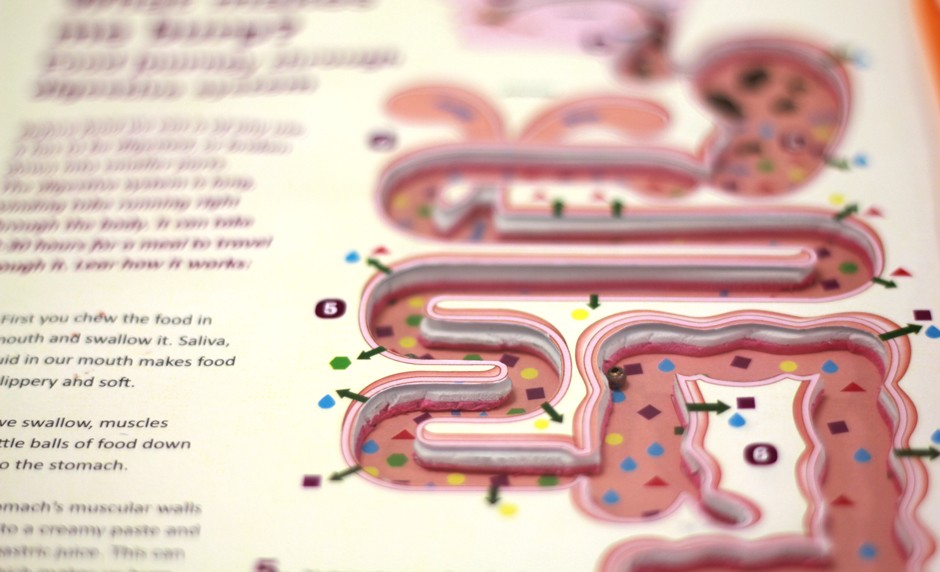
A maze game. Shows how food is travelling inside the intestines.
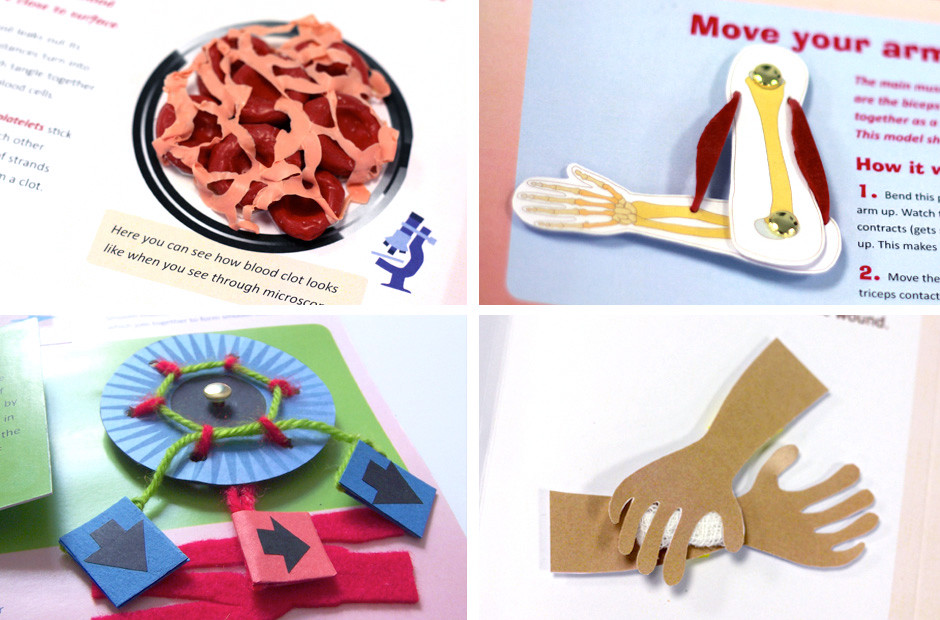
Various experimental ways to display the anatomical processes with simple silicone, paper and textile pop up models:
blood clotting, arm muscles, eye muscles, applying bandage.
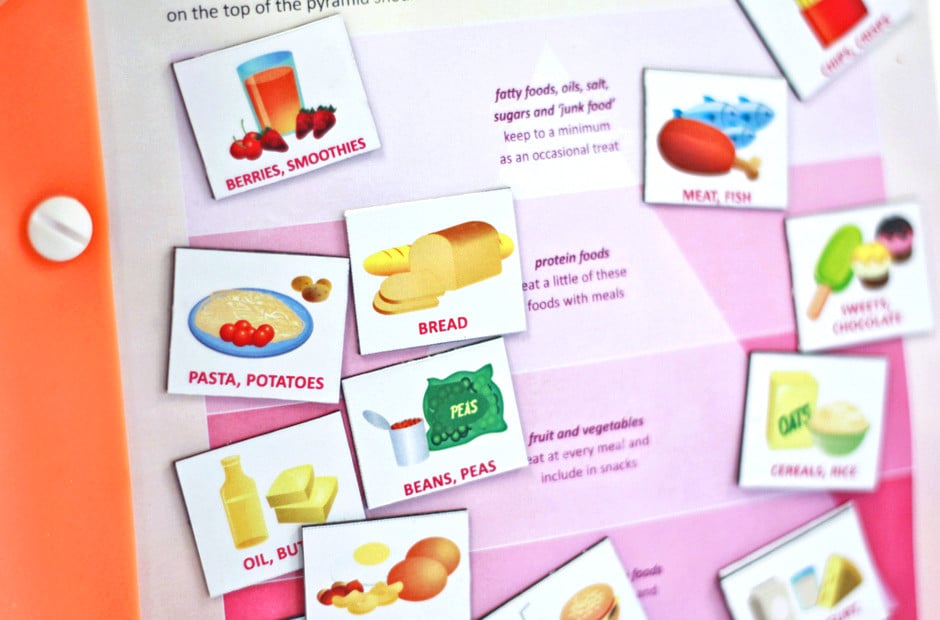
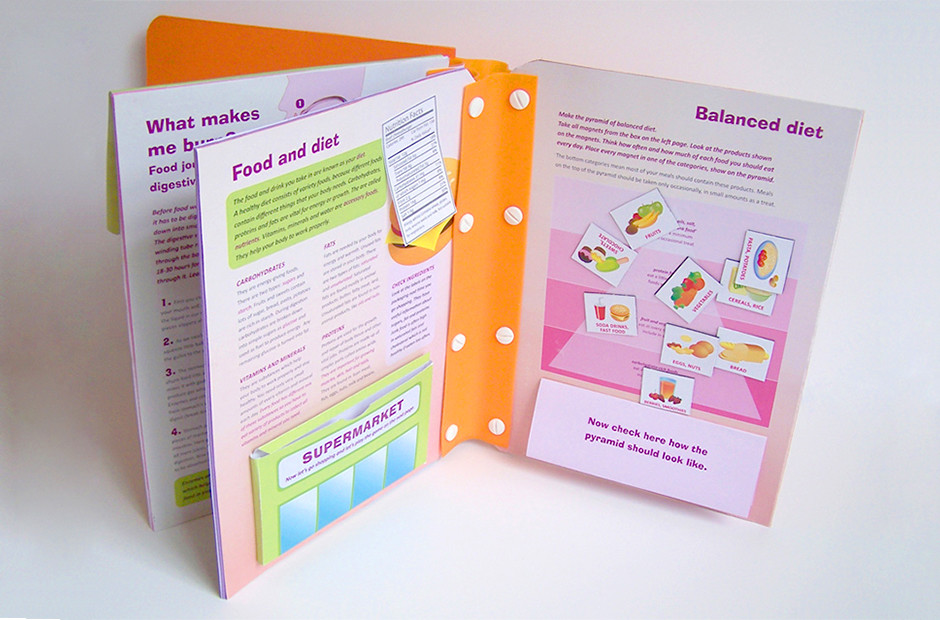
Food Nutrition Pyramid game: Magnetic sheet with magnetic cards.
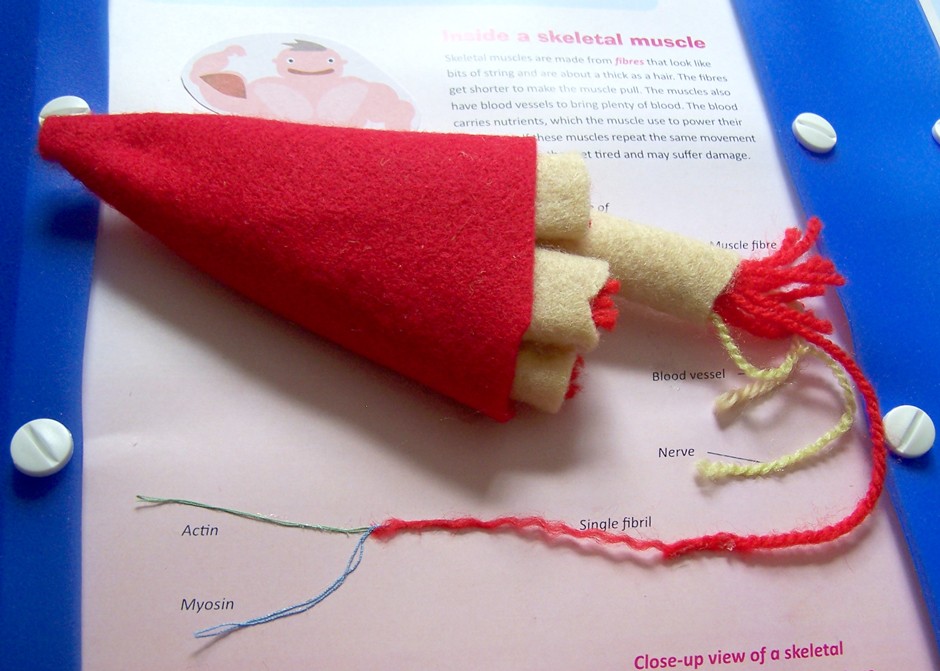
Showing the 3D muscle structure with textile model.